Harsh sun,
cool nights.
Harsh sun and cool nights pull a house in two directions. Start with shade and how the building stores heat, not with a glass wall that faces the afternoon.
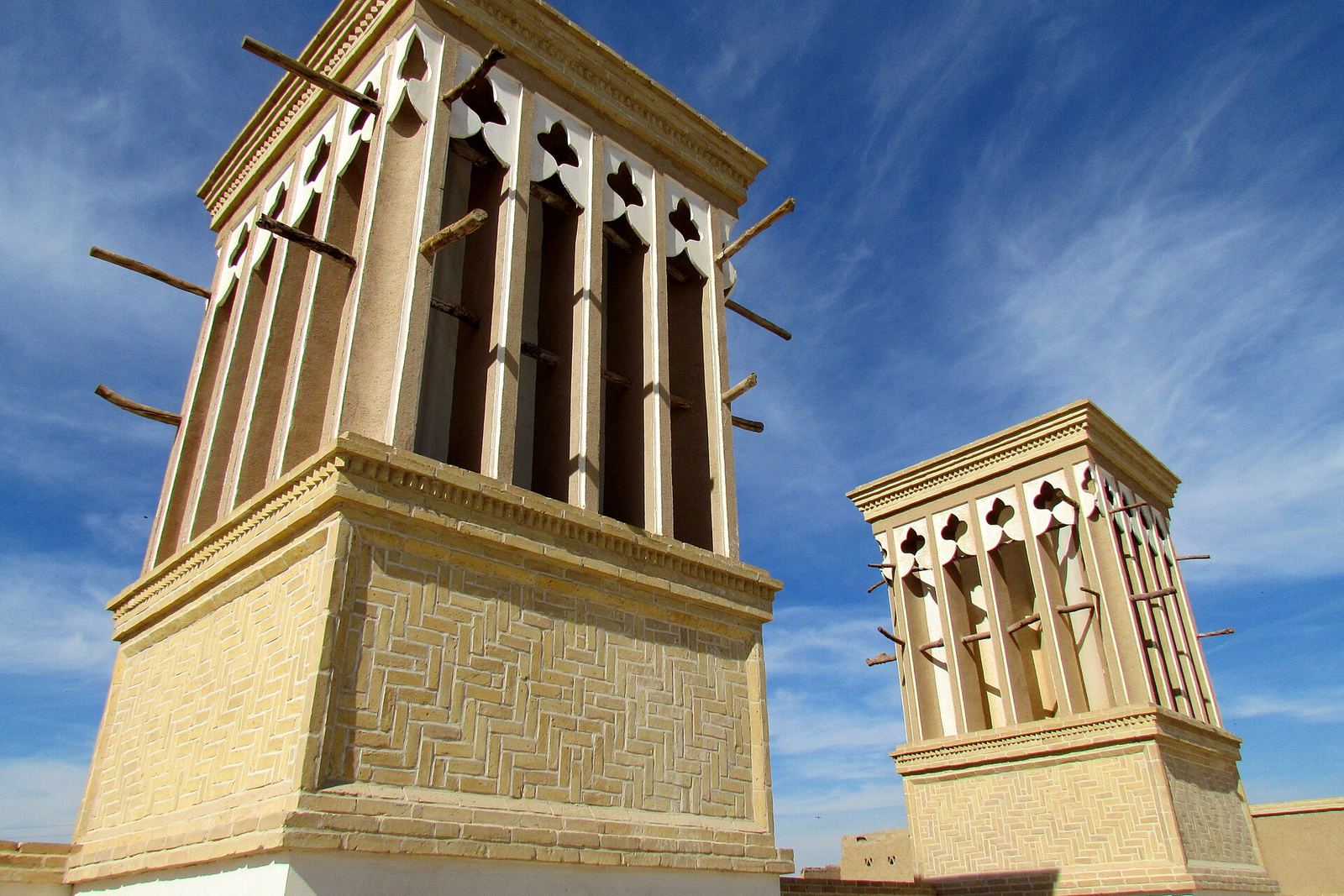
Photograph: Alireza Javaheri · CC BY 3.0. Source and licence.

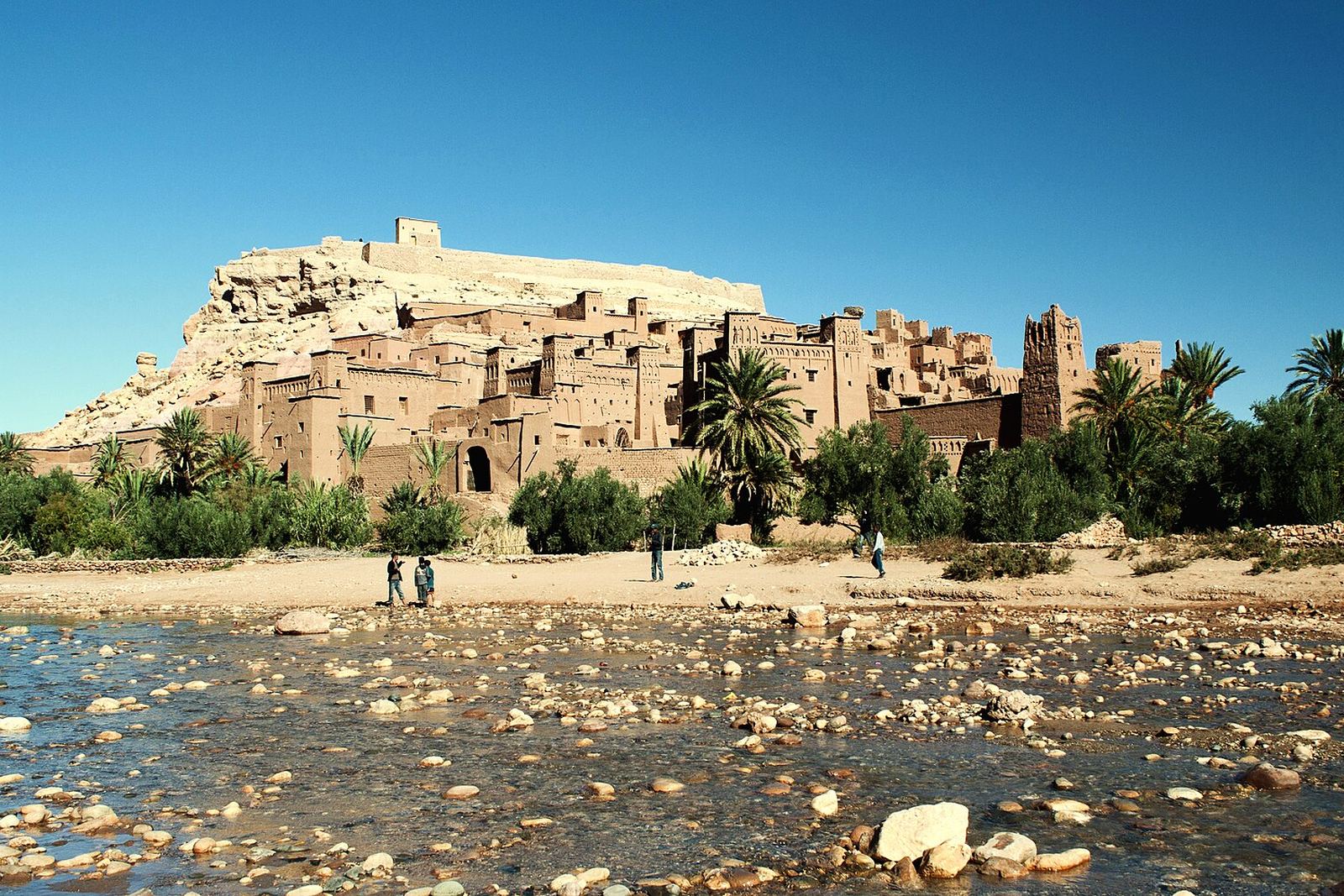
Photograph: Alexander Cahlenstein · CC BY 2.0. Source and licence.

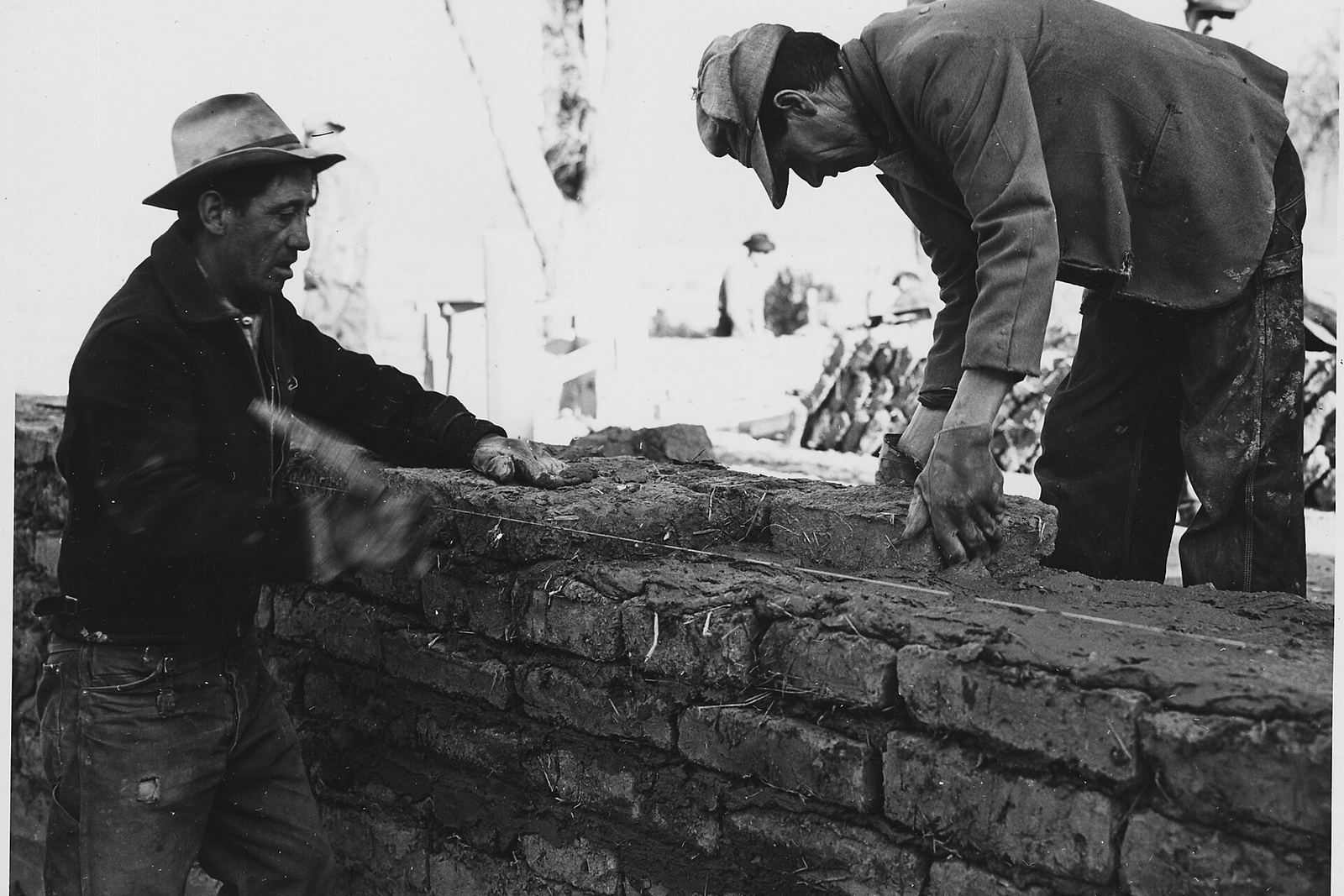
Photograph: Irving Rusinow · Public domain. Source and licence.

Historic towns in hot, dry regions often use thick walls, courtyards, limited daytime openings and devices that move night air — the windcatchers of Yazd, and the earthen ksar of Aït Benhaddou, are shown here as vernacular examples. They are not a construction kit, and they are not automatically lawful or appropriate on a modern plot.
Ask a local designer how shade, thermal mass, night ventilation and dust or very dry air will be handled on your site. Mechanical cooling, where it is used, should be discussed together with how the house works when it is closed. Water, both for the household and for any cooling idea, may be a limited resource; that is a local professional question.
The mid-20th-century photograph of adobe being laid in New Mexico illustrates a massive earth wall under construction. It is a historical record, not a current specification.
Guides to open next
- Design for climateDesign for this climate, not a borrowed photograph.A house designed for a photograph from somewhere else often fails in this climate. Start with the heat, the rain, the wind and the sun on this plot.
 Design for climateCut the energy bill on the drawings, before you buy a single solar panel.Solar panels, batteries and heat pumps are all sized against how much energy the house needs. That number is set much earlier, by the plan, the…
 Design for climateThe insulation that warms a cold house can trap moisture in a humid one.The wall that keeps a cold house warm can trap moisture in a humid one. Ask how heat, air and moisture are meant to move, and where they must not.
 Design for the islandDesign for shade. Make room for air.Shade and a route for air do more for comfort than a bigger air conditioner. Start with the shape of the house and the sun it actually receives.
 Design for climateBefore you choose a window, read its label. Two numbers do most of the work.Frame colour and style are the easy decisions. How much heat a window leaks, how much sun it lets in and how well it is fitted decide whether a…
Sources & scope
Sources reviewed 10 November 2026. International guidance is labelled and used for general principles only. It is not a local building code or a specification for your site.
Explore the journal