
A gas you only find by measuring
Radon has no smell, colour or taste. The World Health Organization’s fact sheet describes it as a radioactive gas produced by the decay of uranium, which is found in all rocks and soils. Outdoors it thins out quickly; the WHO puts average outdoor levels at 5 to 15 becquerels per cubic metre. Indoors it can collect, and the same page gives a range for homes, schools and offices running from 10 to more than 10,000.
The reason anyone cares is the lungs. The WHO estimates radon causes between 3 and 14 percent of lung cancers in a country, depending on average radon levels and how many people smoke, and puts the rise in risk at about 16 percent for every 100 Bq/m³ of long-term average exposure. Smokers carry far more of that risk: the fact sheet says they are estimated to be 25 times more at risk from radon than non-smokers.
None of this shows on a site visit. The ground under the house matters most, which is one more reason to know what the foundation is sitting on, but the only way to know the level in a room is to measure it.
How it gets in, and why next door is no guide
The WHO lists the usual routes: cracks in floors, the joint where floor meets wall, gaps around pipes and cables, pores in hollow-block walls, cavity walls, sumps and drains. Levels are usually highest in basements and rooms in contact with the ground, though upper floors are not automatically clear.
Four things set the level, according to the same page: the local geology, the routes from soil into the building, radon given off by building materials, and how fast indoor air is exchanged with outdoor air. That last one is where modern building meets an old problem. A tighter house holds heat better, as the note on energy-efficient design explains, and it also changes how long indoor air stays put. Planned ventilation, covered in the note on insulation and ventilation, belongs in the same conversation.
The WHO also notes that concentrations vary considerably between neighbouring buildings and from hour to hour. A neighbour’s low result is reassuring news about their house.
Photograph: U.S. Navy photo by Petty Officer 1st Class Sean P Rinner · Public domain. Source and licence.

Three numbers, three countries
Reference levels differ, so read them against the unit and the country. The WHO recommends a national reference level of 100 Bq/m³, and says that where conditions make that impossible it should not exceed 300.
The UK Health Security Agency’s radon guidance uses an Action Level of 200 Bq/m³ and a Target Level of 100. The Target Level applies where smokers or ex-smokers live in the house, and to remediation work. For scale, it gives the average level in UK homes as 20.
The US Environmental Protection Agency works in picocuries per litre. Its health risk page says to fix the home at 4 pCi/L, which it lists as 150 Bq/m³, and to consider fixing between 2 and 4. It gives the average indoor level as 1.3 pCi/L and notes that getting below 2 is difficult. A result of 3 pCi/L is fine in one country and close to action in another, depending on whose table you read.
What goes under a radon-resistant floor
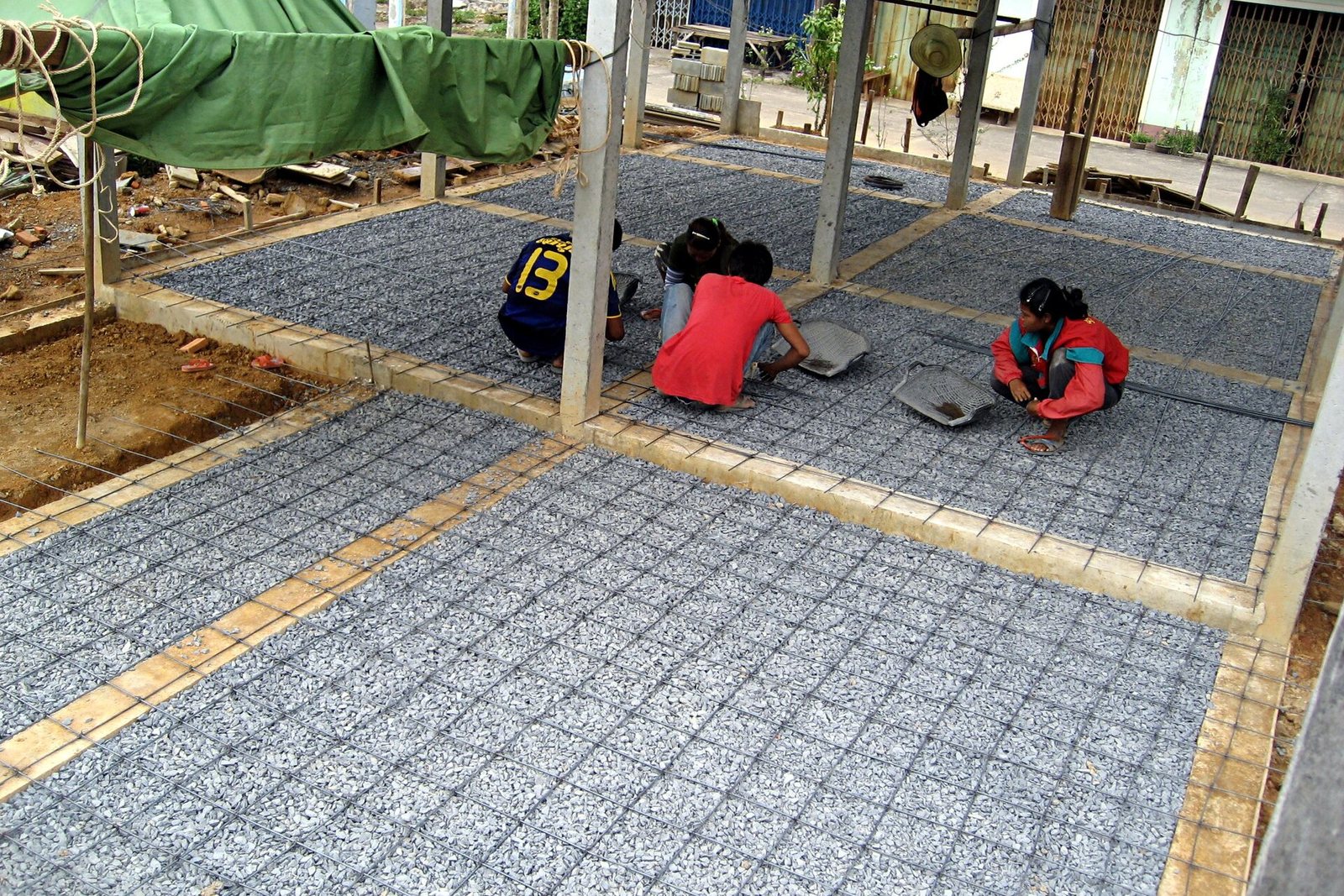
The EPA’s radon-resistant construction page lists five basic features for a new house on a slab. A layer of clean, coarse gravel about four inches deep goes under the slab so soil gas can move; perforated pipe or a collection mat are accepted alternatives where gravel is expensive. Heavy plastic sheeting, 6 mil polyethylene, or a vapour retarder goes over it. A 3- or 4-inch solid PVC pipe runs from the gravel up through the heated part of the house and out through the roof, labelled “Radon System”. Cracks and openings in the slab and walls are sealed with polyurethane caulk. And an electrical junction box is fitted in the attic in case a fan is needed later.
Britain frames the same idea by risk. In England and Wales, guidance calls for basic protection in areas where 3 to 10 percent of homes are predicted to exceed the Action Level, and full protection above 10 percent, as a 2019 Public Health England study summarises. The government’s advice for buyers describes basic protection as a gas-proof membrane in the foundations, and full protection as a radon-proof barrier plus either a radon sump or a ventilated void under the floor. It says to ask building control at the local authority which one applies.
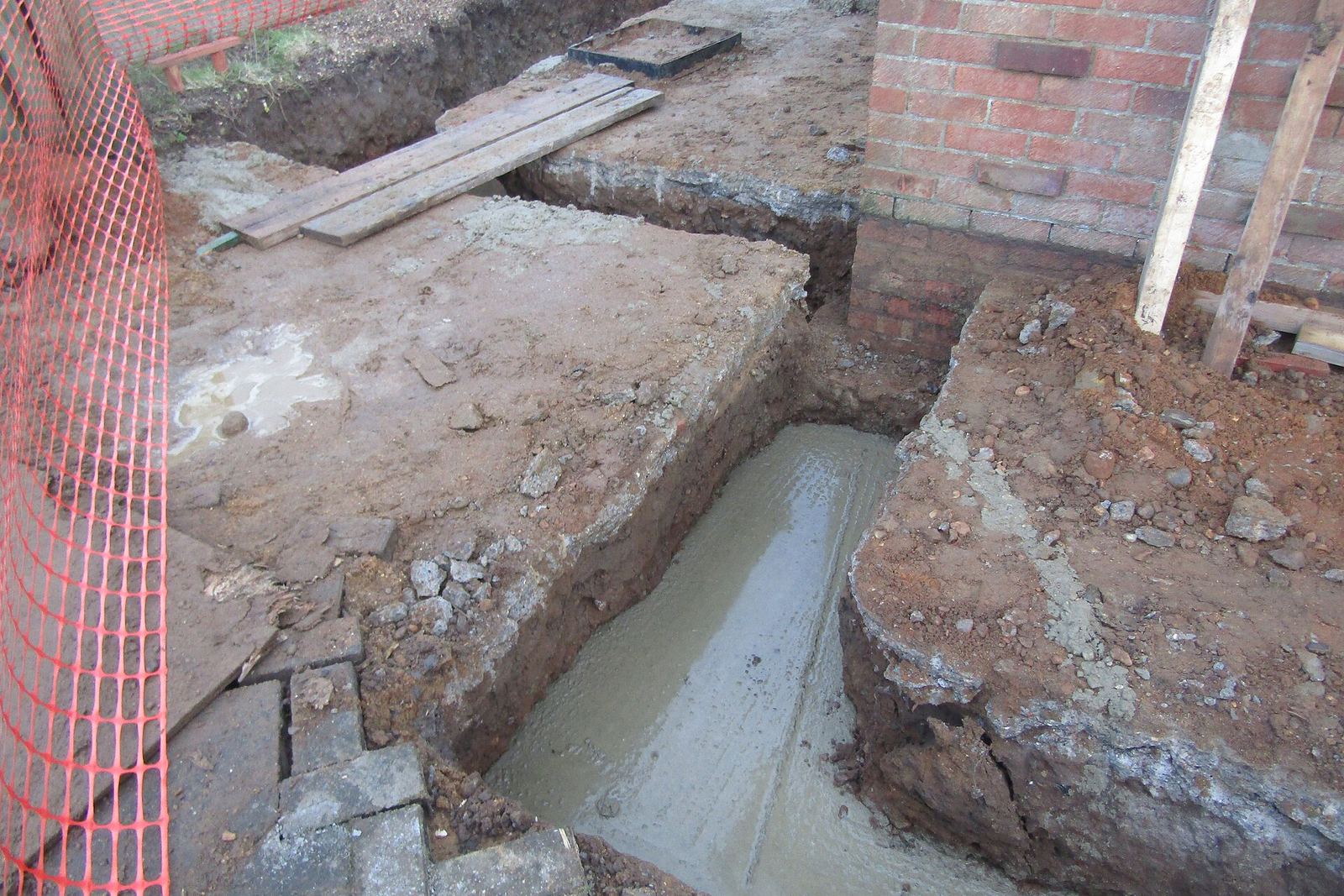
All of it goes in before the concrete. That is why it belongs in the drawings and the price, not in a site conversation on pour day, and why it is worth checking when you compare building quotes.
Photograph: Khaosaming · CC BY-SA 3.0. Source and licence.

A membrane is not a certificate
The 2019 study is useful because it measured real houses. Homes with barriers had radon concentrations more than 40 percent lower than comparable homes without them, and the share above the Action Level fell from around 30 percent to under 12. It also found that about 10 percent of the homes assessed with a barrier were still above 200 Bq/m³. A membrane torn by a boot or punctured by a pipe that was never sealed does not announce itself.
That is why full protection in Britain is built with a capped sump that sits unused. The buyers’ guidance is explicit that full protection does not mean the sump is switched on: if a test comes back high, a fan can be added to the sump pipe, or the cap replaced with a pipe that rises above the eaves. A house with only basic protection can still have a sump or underfloor ventilation fitted afterwards. The WHO adds that passive systems can cut indoor levels by more than half, and that a fan reduces them further.
The EPA makes the money argument plainly. It says the cost to a builder of including these features is typically less than the cost of mitigating the house after construction, and that a buyer can ask the builder to include them if they are not offered.
The test you still owe the house
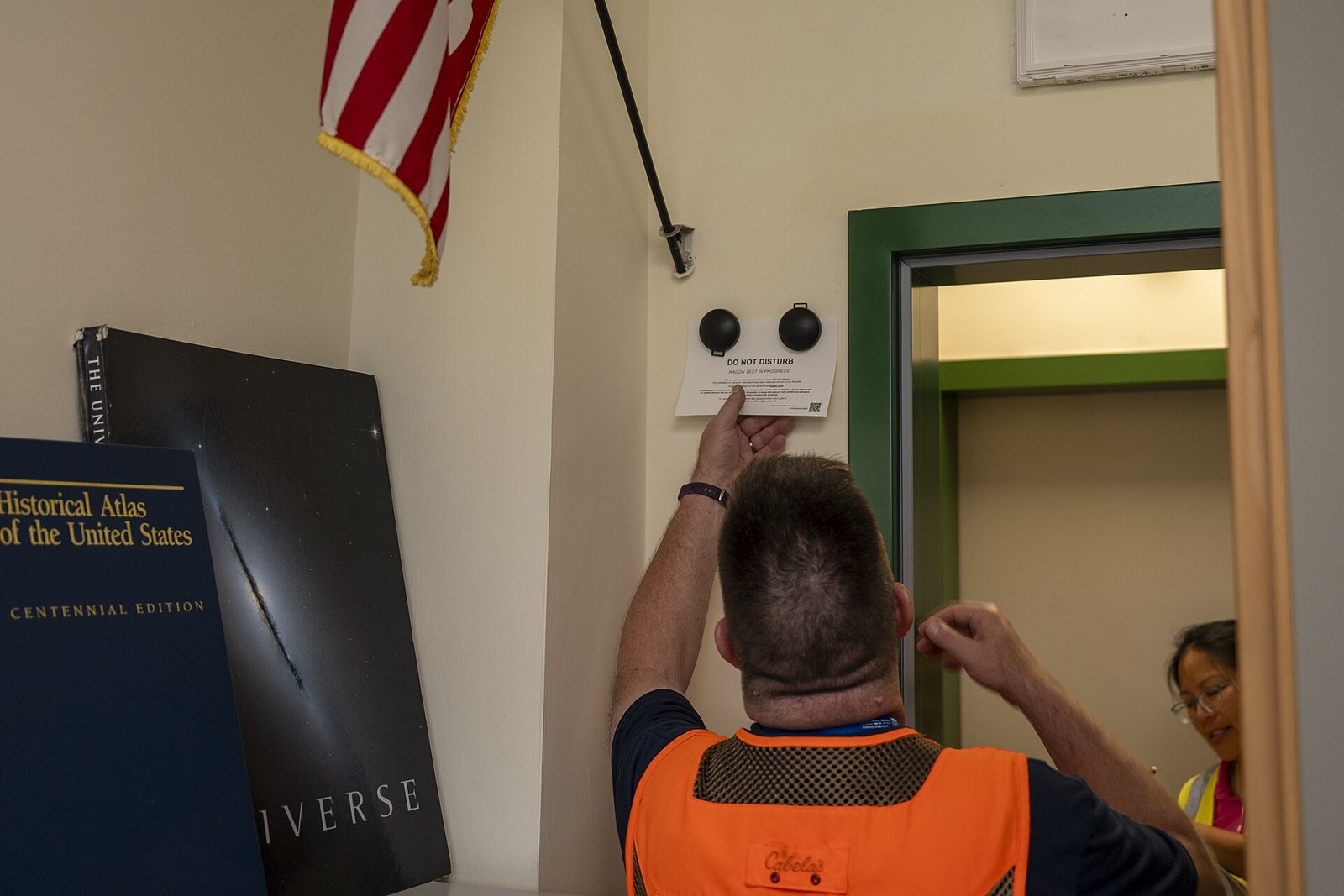
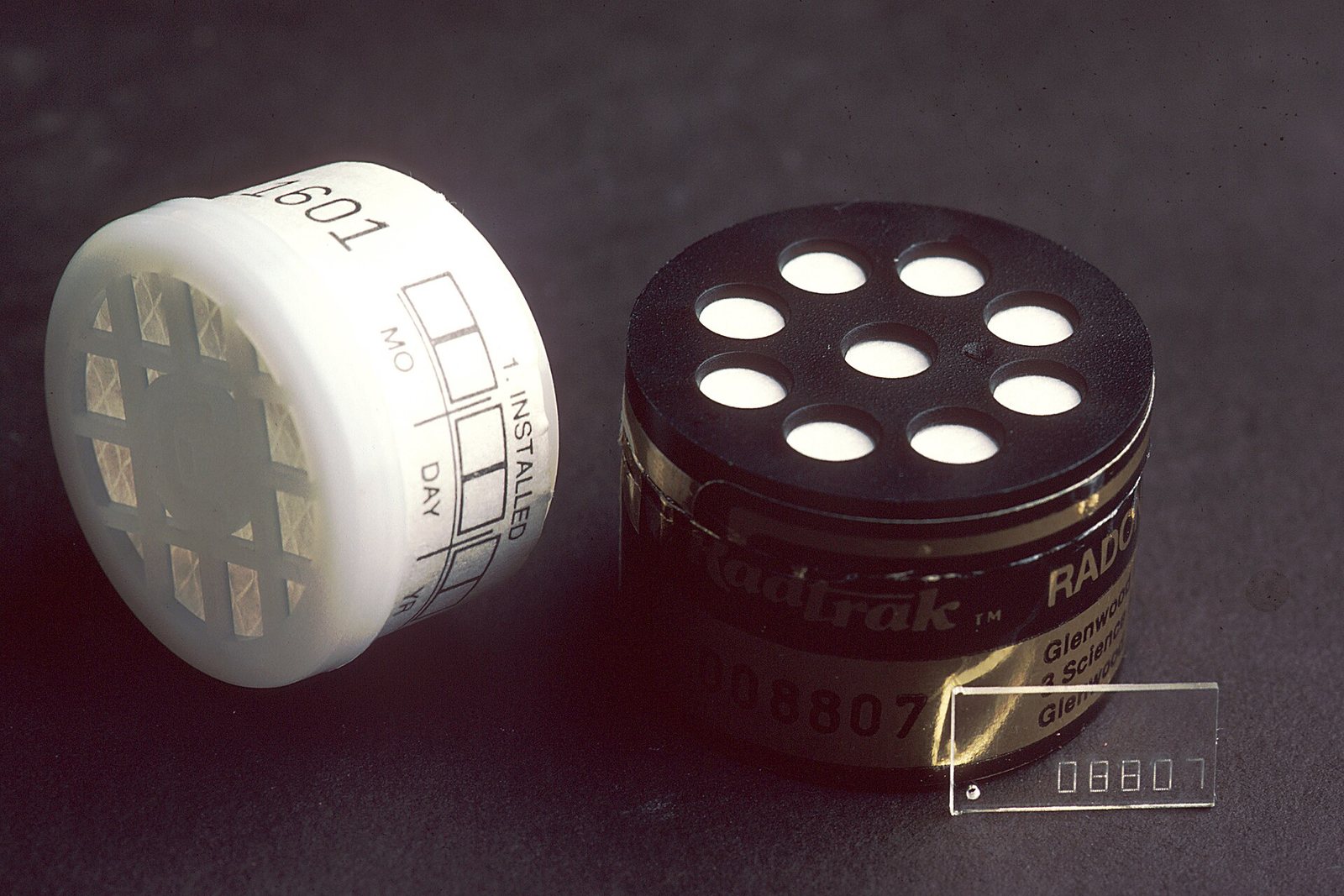
The UK guidance recommends a radon test once you move into a new home, because protection does not guarantee a result below the Action Level. The WHO explains why the test has to be long: levels swing so much that the annual average is best estimated by measuring for at least three months. Small passive detectors do the job, and the WHO says measurements should follow national protocols; short tests are kept for time-pressed decisions such as a sale, or for checking that mitigation worked.
Put the test in the handover pack, alongside the warranty papers and the drawings, so it does not fall through the gap between builder and owner; the note on a clean handover covers what that pack should hold. If your country publishes a radon map or a postcode check, look it up before the foundation design is fixed, not after the keys arrive.
Photograph: US National Cancer Institute · Public domain. Source and licence.

Do
- Check the official radon map or risk report for the plot before the foundation is designed.
- Ask for the radon measures to be shown on the drawings and priced in the quote.
- Test with a long-term detector once you are living in the house.
Avoid
- Assume a neighbour’s result applies to your house.
- Let services be pushed through the membrane without sealing them.
- Treat a membrane or a capped sump as proof that the level is low.
Sources & scope
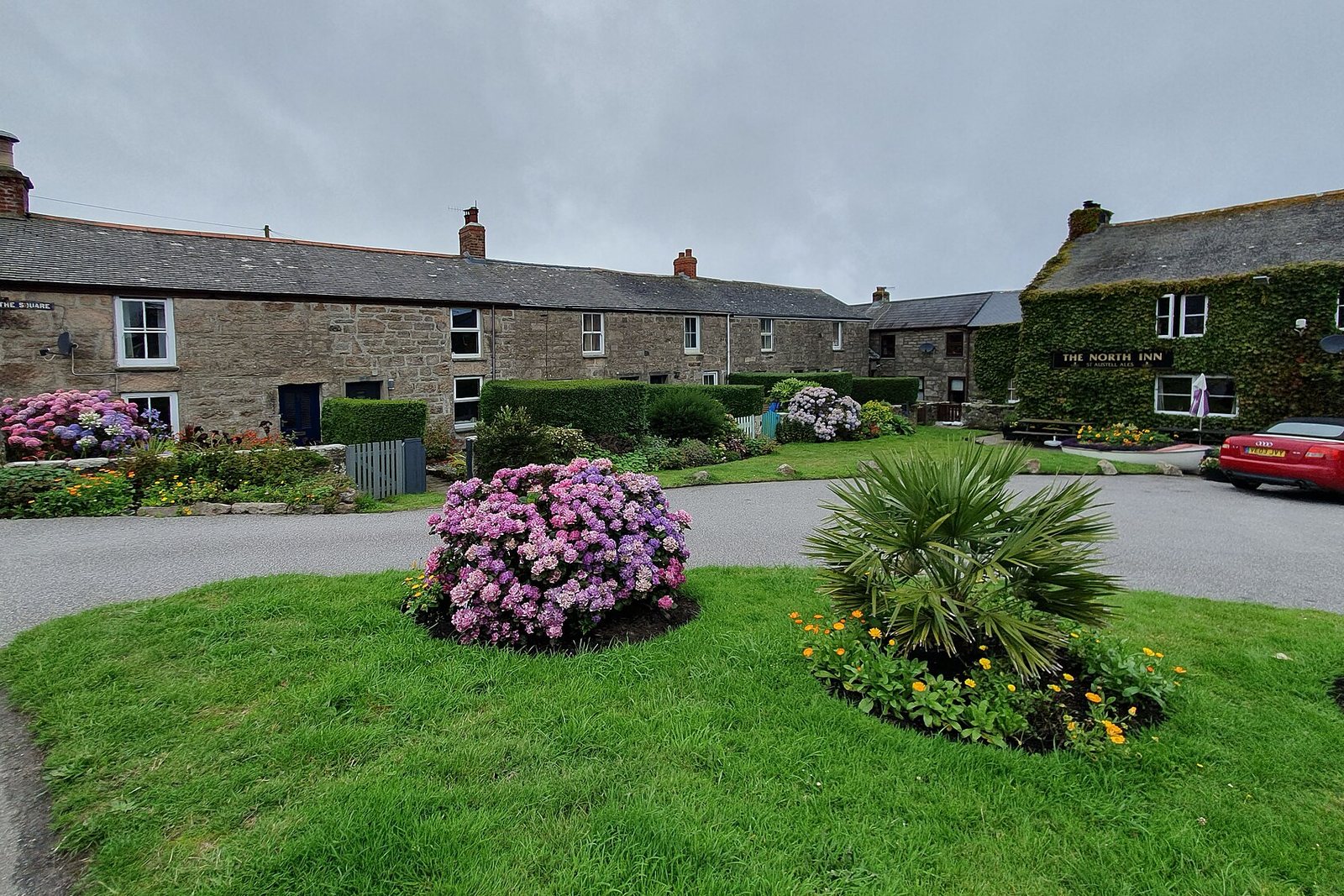
Sources reviewed 29 November 2026. Reference levels and building guidance differ between countries: the UK figures apply to the UK, the England and Wales protection bands come from guidance summarised in the 2019 Public Health England study, and the EPA techniques describe US practice. Mauritius is not covered here, and we make no claim about radon levels on the island. This is not medical, technical or legal advice: ask your local building authority and a qualified professional. The photographs from Cornwall, Naples and Thailand show places and a building stage in general, not a radon result or a recommended product.
- World Health Organization · Radon and health (fact sheet, 2023)
- US EPA · Radon-resistant construction basics and techniques
- US EPA · Health risk of radon
- UK Health Security Agency · About radon
- UK Health Security Agency · Radon for home buyers and sellers
- Public Health England · Performance of basic radon protection in new homes, 2019 (PDF)
Written by 3dspace.mu Editorial. This article is general educational material, not professional review or advice for your site. No claim of architect or engineer authorship is made.
Read next
 Build carefullyThe foundation has to match the ground.Clay, sand, rock, peat and filled ground do not carry a house in the same way. A foundation that works on one plot can be the wrong choice a…
 Build carefullyWater finds the detail you forgot.Water gets in at the detail you forgot: a balcony edge, a window sill, a drain that goes nowhere. A waterproofing product is not a design.
- Build carefullyCheck it before it disappears.Once the plaster is on, you are trusting a photograph and a memory. Agree what will be inspected, and when, before the work is covered.